SCANDINAVIAN-CANADIAN STUDIES/ÉTUDES SCANDINAVES AU
CANADA
Vol. 33 (2026) pp.1–18
DOI:10.29173/scancan285
Copyright © The Author(s), first right of publishing Scan-Can, licensed under CC-BY-NC-ND 4.0.
Is There a Doctor on Vopnafjord? : Disability, Health, and Embodied Difference in Vápnfirðinga saga
Authors/écrit par:
Yoav Tirosh
Yoav Tirosh
Statement of responsibility/Déclaration de responsabilité:
Special issue editor/numéro spécial edité par:
Alice Bower
Special issue editor/numéro spécial edité par:
Alice Bower
Statement of responsibility/Déclaration de responsabilité:
Special issue editor/numéro spécial edité par:
Yoav Tirosh
Special issue editor/numéro spécial edité par:
Yoav Tirosh
Statement of responsibility/Déclaration de responsabilité:
Co-editor/Corédaction du journal:
Katelin Parsons, Árni Magnússon Institute
Co-editor/Corédaction du journal:
Katelin Parsons, Árni Magnússon Institute
Statement of responsibility/Déclaration de responsabilité:
Co-editor/Corédaction du journal:
Brynjarr Þór Eyjólfsson, University of Turku
Co-editor/Corédaction du journal:
Brynjarr Þór Eyjólfsson, University of Turku
Statement of responsibility/Déclaration de responsabilité:
Production Editor/Production:
Ryan E. Johnson, University of Iceland
Production Editor/Production:
Ryan E. Johnson, University of Iceland
Statement of responsibility/Déclaration de responsabilité:
Translator/Traduction:
Malou Brouwer, University of Alberta
Translator/Traduction:
Malou Brouwer, University of Alberta
Marked up to be included in the Scandinavian-Canadian Studies Journal.
Source(s): Tirosh, Yoav. 2026. “Is There a Doctor on Vopnafjord? : Disability, Health, and Embodied Difference in Vápnfirðinga saga.”
Scandinavian-Canadian Studies Journal / Études scandinaves au Canada 33: 1–18.
Keywords:
- Disability studies
- disability history
- disability
- Old Norse literature
- Icelandic sagas
- Íslendingasögur
- embodied difference
- REJ: started markup January 19, 2026
Is There a Doctor on Vopnafjord?
Disability, Health, and Embodied Difference in Vápnfirðinga saga
Yoav Tirosh
ABSTRACT: This article focuses on Vápnfirðinga saga [The Saga of the
People of Weapons’ Fjord], a somewhat less discussed member of the so-called Íslendingasögur. It will be argued that disability, health, and
embodied difference are in fact not only of interest to the saga author, but an
organizing theme for the narrative as a whole. The article is structured
around the plot’s advancement rather than thematically, a choice meant
to show the discursive and practical development of attitudes towards
embodied difference within the text.
RÉSUMÉ: Cet article se concentre sur la saga Vápnfirðinga [La saga du
peuple du fjord des Armes], une saga quelque peu moins discutée de ce
qu'on appelle les Íslendingasögur. Il sera démontré que le handicap, la
santé et la différence incarnée ne sont en fait pas seulement des sujets
qui intéressent l’auteur de la saga, mais constituent un thème organisateur pour
l’ensemble du récit. L’article est structuré autour de l’évolution de
l’intrigue plutôt que de manière thématique, un choix visant à montrer
le développement discursif et pratique des attitudes envers la différence
incarnée dans le texte.
“Surely there is not much of the spirit of Christian forgiveness in a man who, to avenge his father’s death, makes five attempts to ambush and kill the perpetrator’s son!”
(Hollander 155)
Introduction
The body has become the focus of much research and scholarly
attention in the last few decades, with the realization that bodily
experiences and bodily perceptions have a noticeable impact on
literature. This shift is best expressed by scholars opting for
“bodies” rather than “body” when discussing images and understandings of the
corporeal side (Butler; Künzler). Beyond issues of gender and sexuality, the
body is a scene of meaning negotiation. As is being demonstrated much in
recent years, one discovers that many avenues of interpretation open up to the
student of Old Icelandic sagas that opts for focussing on the body: even in its
silence, the body speaks volumes (Heiniger). This has become ever more clear
in research that applies observations from Disability Studies to saga research.
While caution should always be placed on not imposing our own interpretations
on a text from the past that sees us as its “unintended readers” (Sayers 166;
Sexton 149–150), the overwhelming evidence for bodily concerns in saga
literature demands our attentions and clarifies that the authors and their
intended readers were in fact very preoccupied with issues of disability, health,
and the body.
This article focuses on Vápnfirðinga saga [The Saga of the People of Weapons’
Fjord], a somewhat less-discussed member of the so-called Íslendingasögur.
The
saga’s single extant medieval text witness (AM 162 c fol) consists of only one or
two leaves,
and its post-medieval manuscripts give clear indications that the
manuscript they copied from was often corrupted beyond reading. Its
narrative—which centres around Vápnafjǫrðr in Northeast Iceland—consists of
two main parts, the first concerning the two friends and in-laws Brodd-Helgi
Þorgilsson and Geitir Lýtingsson, and the second their sons Bjarni Brodd-Helgason and Þorkell Geitisson. These men and their affairs are well
documented in various prose sources from the thirteenth century onwards, as
well as in the poem Íslendingadrápa (ÍF 11, xv–xxv), which Jónas Kristjánsson had
dated to the twelfth century (dating that has remained inconclusive (Bjarni
Einarsson)). Heller states that “im Mittelpunkt des ersten Teiles steht die Idee
der Freundschaft” [In the center of the first part stands the idea of friendship]
(171; my tentative translation).
The article is structured around the plot’s
advancement rather than thematically, a choice meant to show the discursive
and practical development of attitudes towards embodied difference within the
text. It will be argued that disability, health, and embodied difference are, in
fact, not only of interest to the saga author, but an organizing theme for the
narrative as a whole.
The saga's first feud
The very first scene in Vápnfirðinga saga highlights ability and overcoming
adversity, achieved through the author’s witty writing.
Helgi Þorgilsson
notices that his kinsman’s bull is attacked by another bull in the pen, with the
assailant on the winning side. To help the losing bull, Helgi attaches to its head
an ice-spur, giving it a literal edge in the battle. This occasion also attached the
spur to Helgi through the nickname Brodd-Helgi, Spur-Helgi. In this scene, we
already see a discussion that will be prevalent throughout the text: if the
weakness of the bull constitutes embodied difference, Helgi helps him (or his
owner, Helgi’s kinsman) overcome this. This act then becomes inseparable from
Helgi via his name. The fact that Brodd-Helgi’s act has both a helping and a
violent side to it stresses the two sides of disability and embodied difference
that are established in the text; in this saga, like the spur in Helgi’s name, the
body becomes a theatre where both friendship and generosity can be exhibited,
but also where the very same relationships can be torn apart. Next, the saga
describes how sheep go missing from the farm of Brodd-Helgi’s grandfather,
Þorsteinn hvíti [the White], who lives in Hof in Vápnafjǫrðr. His grandson
Brodd-Helgi, at the age of 12, has the likely thief Svartr outlawed and then goes
to confront and ultimately kill him. On his way to the deed, he again uses
prosthetics, which serve to supplement his age-related embodied difference; he
places a flagstone on the front of his body, protecting him from fatal strikes.
Upon his ascent to Smjörvatn, where Svartr is residing, the outlaw notices this
knáligr man (ÍF 11, 25), which John Tucker translates as “capable” (ÍF 11, 25; Saga
of the People of Vopnafjord 314). The word kná, a cognate of “to know,” designates
“to be able to,” or “can” (Orel 218),
with knáligr therefore focusing on the
ableness of would-be assassin Brodd-Helgi; it is as if his use of prosthetics
influenced the shape of his whole body.
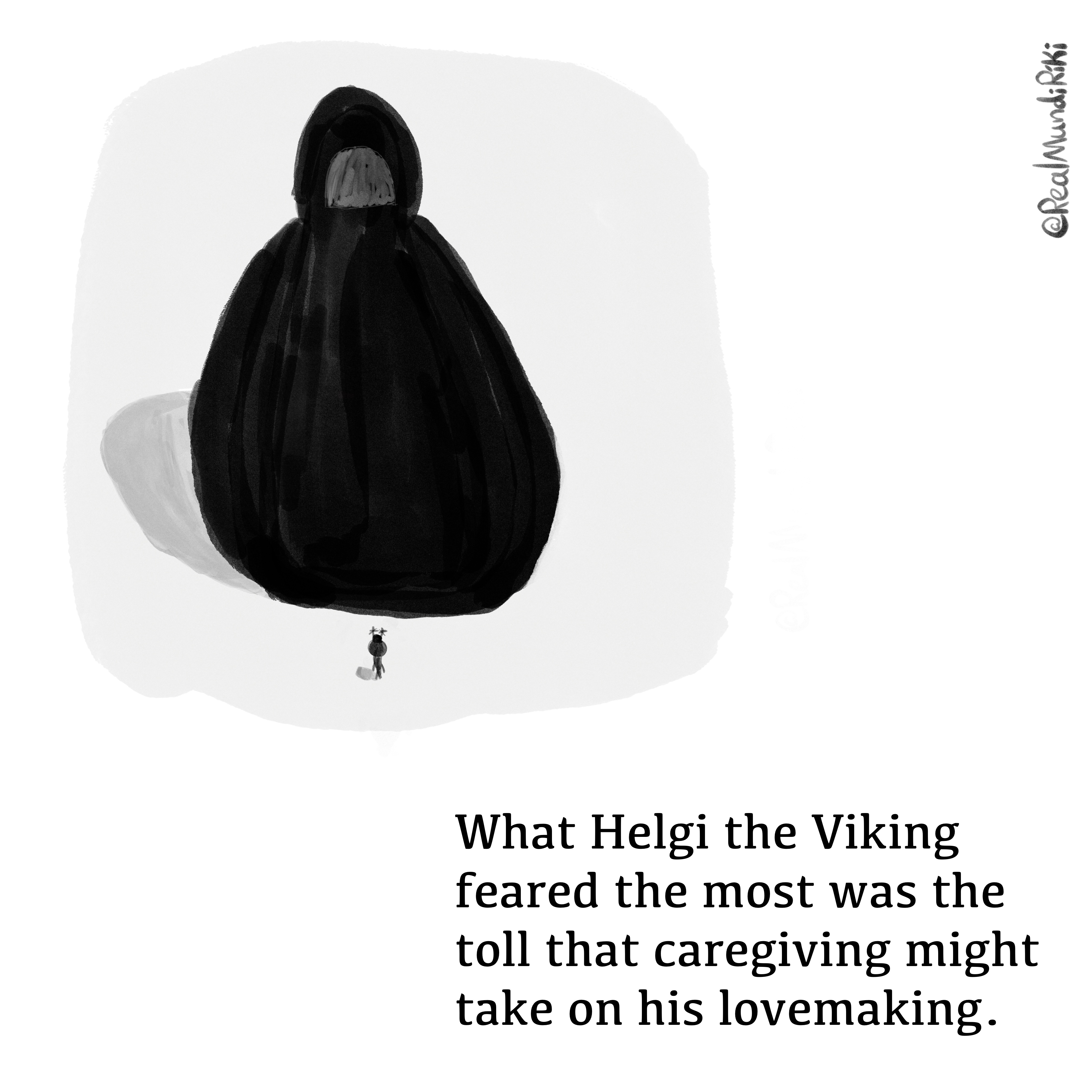 Figure 1 Helgi the Viking - Yoav Tirosh @RealMundiRiki.
After these feats of youth, the saga’s other main family of protagonists are
introduced: the Krossvíkingar. Geitir Lýtingsson is to be Brodd-Helgi’s friend
turned bitter enemy, while his sister Halla Lýtingsdóttir is to be his wife turned
bitter ex. The third Krossvíkingar sibling, Blængr, is introduced as “rammr at afli ok
hallr nǫkkut í gǫngu” (ÍF 11, 27). John Tucker translated this as “a very strong
man but somewhat stooped when he walked” (Saga of the People of Vopnafjord
315). The choice of translating “ok”—usually translated as “and”—as “but”
stresses the contradictory associations between strength and embodied
difference that exists in modern society, and/but not always in the high and late
medieval Icelandic world. Geitir Lýtingsson and Brodd-Helgi’s friendship is
unsettled when their attempt at obtaining the wealth of a murdered Norwegian
sailor is foiled. Geitir and Brodd-Helgi suffer from mutual suspicions and,
perhaps, feelings of guilt over the crime. Their childhood bond is disrupted even
further when Halla—who is by this point married to Brodd-Helgi—takes ill. After
she informs her husband Brodd-Helgi of her sickness, he makes overtures of
love and devotion, only to quickly find a young and wealthy—not to mention
healthy—new wife. Helgi then removes Halla from their shared household and
denies her of her dowry to boot. This ill-treatment of an ill person will be
mirrored later in the saga by an alternative approach to sickness, one that
strengthens ties through healing rather than cutting relationships due to the
challenges that it presents. At this juncture, though, the illness of Helgi’s wife
is enough to wedge their relationship apart. It is clear that Brodd-Helgi’s actions
were not necessarily within the social norm; “Þegar spurðusk þessi tíðendi um
heraðit, ok lagðisk illr rómr á, því at Halla var vinsæl af ǫllum mǫnnum” [The
news spread quickly throughout the district and was greeted with little
applause, for Halla was popular with everyone] (ÍF 11, 36–37; Saga of the People of
Vopnafjord 320). Other people in the district, therefore, felt that this was not the
obvious modus operandi for one who discovers that his wife is sick. Later in the
saga, when her brother Geitir is away from Krossavík, Halla sends for her ex,
Brodd-Helgi. Upon his arrival, “hon bað hann, at hann skyldi sjá meinit. Hann
gerði svá, ok kvazk honum þungt hugr um segja. Hann hleypir út vatni miklu ór
sullinum, ok varð hon máttlítil eptir þetta” [She asked him to have a look at her
sore. He did this, and said it seemed a grave matter indeed. He pushes much
water out of the boil, and she became exhausted after this] (ÍF 11, 44; Crocker
and Tirosh 120). She then asks him to remain with her for the night, but is
refused. This is one insult too many, and Halla finally tells Brodd-Helgi off for
abandoning her. Helgi goes back to Hof in a bad mood, and Halla dies shortly
after. Sigríður Baldursdóttir (89-90) diagnoses Halla’s disease as echinococcosis
which is transmitted by tapeworms, and argues that the treatment Halla
demands of Brodd-Helgi, as well as her wish that he remain with her overnight,
is consistent with the handling of the disease that is prescribed in the fifteenth-century medical treatise found in AM 696 II 4to. According to her interpretation,
by not staying with Halla and keeping her awake during the peak of her disease,
he is essentially contributing to her death. Sigríður also reads this interaction
as symbolic of their relationship; her disappointment, exhaustion, and
subsequent death as reflective of Brodd-Helgi’s mistreatment of Halla
throughout her illness (Baldursdóttir 90). Brodd-Helgi’s neglect of his husband
duties must have had an emotional—and perhaps medical—contribution to
Halla’s death (see also Crocker and Tirosh 119–21).
As Halla’s health and marital situation deteriorate, her brother Geitir and
husband Brodd-Helgi get into another dispute involving Þormóðr, a þingmaðr of
Geitir, and his mismanagement of a shared wood with Þórðr, a þingmaðr of
Brodd-Helgi. This dispute is anticipated by Þórmóðr’s earlier introduction: “Í
þann tíma bjó sá maðr í Sunnudal, er Þormóðr hét ok kallaðr [stikublindr]” [In
those times there lived in Sunnudalr that man who is called Þórmóðr and was
nicknamed stikublindr] (ÍF 11, 27, my emendation; my translation).
The
nickname “stick blind” could be a reference to some unchronicled incident
involving Þórmóðr and a stick; perhaps with a lasting eye injury. It could also
be seen as a pun that almost predicts the trouble that will be caused by
Þormóðr’s failure to divide the bounty of the woods equally.
Regardless, here a
man with a nickname designating embodied difference, either mental or
sensory, is the source of a dispute between the two former friends. The text
continues to tie the man’s fate with his by-name, when Brodd-Helgi catches
wind of Þormóðr’s approach to his farm to summon him for cutting down his
shared woods with Þórðr. Brodd-Helgi—who never misses an opportunity to
incorporate props into his portfolio—tells his men: “Þér skuluð hǫggva yðr sviga
stóra ór viði ok stafi marga” [You must cut yourselves great switches of wood
and many staves] (ÍF 11, 40; Saga of the People of Vopnafjord 321). He prepares for
an attack in response to the cutting of the woods by cutting wood. Then, when
Þormóðr and some of his companions die at the hands of Brodd-Helgi and his
men, the chieftain has the bodies wrapped in small branches (hrís). When Geitir
sends a force to retrieve the bodies from Brodd-Helgi, he devises his own plot;
disguised as coal-makers coming from the woods, a select group of his men
secretly smuggle Þormóðr and his companions’ bodies. In death, as in life,
Þormóðr’s fate is tied—literally and figuratively—with wood (see also Bourns 2023).
Following Þormóðr and Halla’s deaths, relations between Geitir and Brodd-Helgi reach an all-time low. Several manoeuvres and manuscript lacunae later,
Brodd-Helgi finds his death, most likely by the hands of Tjǫrvi, whose nickname
inn mikli denotes a large size, implying that he is large and likely strong.
Somewhat later, the narrative sees Tjǫrvi being de facto sacrificed by Geitir to
appease Bjarni Brodd-Helgason, who has vengeance on his mind. But the
avenging son is egged towards further bloodshed by his stepmother, Þorgerðr
silfra.
The scene of Geitir’s death, marked by problematic transmission, is of
interest. After the killing of Brodd-Helgi, his son Bjarni is treated by his uncle
Geitir—who is also his father’s direct or indirect killer—much like a son. This is
reminiscent of Brennu-Njáls saga [The Saga of Njáll the Burner]
and that
murderous protagonist’s warm attitude towards his foster-son Hǫskuldr, whose
father’s death he allowed. Like Njáll, before his death, Geitir has visions of blood
on a cloth near his bed and, presumably, all around his house. To this Bjarni
responds: “mun þat vera blóð í augu þér fyrir sakir elds/elli.”
Jón Helgason
reads the last word as “ellz,” designating fire, but “sakir elli” could be suggested
as another possible reading, with the last letter unclear. Therefore, this text
could be translated as: “It must be blood in your eyes because of the fire/old
age.” Both readings offer medical interpretations that are meant to shoo away
an ominous paranormal event. The killer gaslights his future victim here by
dismissing a paranormal premonition and instead turning to ageism as a way of
distracting Geitir from his impending doom.
Later, after Þorgerðr eggs Bjarni and he is set upon killing his kinsman, he
complains about his leg becoming numb, Geitir responds “ligg þú þá kyrr á” [Lie
still then] (ÍF 11, 52; Saga of the People of Vopnafjord 328). This numbness of the
leg invites an understanding of the body that is dominated by the religious
model, a religious understanding of embodied difference. The condition here
could be read as a God giving Bjarni an opportunity to avoid the violence he is
about to commit through physical means (Baldursdóttir 96).
That being said,
this interpretation ignores the interesting dynamics that take place here
and mark this scene as the structural midpoint of Vápnfirðinga saga. When Bjarni
complains about the numb leg, Geitir naturally takes the role of caregiver and
offers advice for treating Bjarni’s (non-consequential) health predicament.
Bjarni responds to this show of care and friendship with violence, striking Geitir
on his head. However, we are told that “Ok jafnskjótt sem hann hafði hǫggit
Geiti, þá iðraðisk hann ok settisk undir hǫfuð Geiti, ok andaðisk hann í knjám
Bjarna” [And as soon as he struck Geitir, he regretted it and set Geitir’s head on
him, and he died on Bjarni’s knees] (ÍF 11, 53; my translation).
It could be said that the first half of the saga portrays characters who reside
in an uncompromising world, where a show of weakness amounts to showing
an enemy an opening from which to strike. When people do not follow through
with their societal duties and refuse to give the care required by the ones that are
dependent on them, society adopts a kind of chaos that reigns supreme in the
first half of the saga. The ill-treatment of the bodies of the living also extends
to the ill-treatment of the bodies of the dead; Brodd-Helgi’s pitiless handling of
Geitir’s men’s bodies goes hand in hand with his pitiless handling of his role as
Halla’s husband. It is surely no coincidence that Vápnfirðinga saga’s earliest
extant text witness shares its manuscript with Ljósvetninga saga’s C-redaction,
where Eyjólfr’s mishandling of his brother’s wounded body results in the
sibling’s death (see also Tirosh 2025). Rather than leave matters on a sad note,
the saga moves to offer us a glimpse of hope through the continued struggle but
eventual reconciliation of the next generation.
The saga's second feud
The killing transforms Bjarni, who eases his murdered uncle Geitir’s pain
during his last moments. From this point on in the saga, Bjarni strives for
peace—or, at any rate, avoidance of conflict—with the Krossvíkingar, and does
this through the machinations of healing. As Sigríður Baldursdóttir has pointed
out, this is not an intuitive understanding of Bjarni’s character, who is called
Víga-Bjarni [Killer Bjarni] elsewhere in Old Norse literature (Baldursdóttir 96;
see also Sigurðsson 146–157), not a nickname usually awarded to FIFA Peace
Prize laureates.
At this juncture, Þorvarðr læknir [the Healer] of Síreksstaðir appears. About
him it is reported that “Hann var vinsæll, ok var þá kallat, at hann væri beztr
læknir þar í heraði” [He was popular, and it was said that he was the best healer
there in the district] (ÍF 11, 53; Crocker and Tirosh 121). Þorvarðr constitutes a
(very literal) healing element on the area of Vápnafjǫrðr, and despite belonging
to Bjarni Brodd-Helgason’s political camp and sphere of influence, his presence
and abilities facilitate peace. The notion of a healer as peacemaker is not unique
to Vápnfirðinga saga. In Hrafns saga Sveinbjarnarsonar, the chieftain
protagonist, who is also a trained læknir, shows kindness and a constant
conciliatory attitude towards his friend turned political rival turned killer
Þorvarðr Snorrason (see also Bragason). In addition to the healer’s attempts at
peaceful resolution, we will see that the political association with a healer
functions as a form of social currency.
Another character who appears in the story at this point is Þorkell
Geitisson, son of Geitir, who returns from his travels abroad. Following this, he
embarks on an unrelenting attempt at ending Bjarni Brodd-Helgason’s life, as
revenge for his father’s fate. His first action is to gather a force of men to meet
Bjarni during his travel up to the mountains. When Þorvarðr læknir gets wind
of this, he immediately informs Bjarni, thus helping him evade a violent
encounter. Later, Þorvarðr binds a man’s broken leg, and upon his sojourn
home, he meets a man of Þorkell Geitisson’s named Kollr. Þorvarðr surmises
that Kollr’s mission was somehow connected with spying, as indeed it was.
Þorvarðr informs Bjarni Brodd-Helgason of this and is then sent to report to
Þorkell a fictive number of men present at the Hof farm, thus deterring him
from attacking. Here Þorvarðr again moves to de-escalate a situation, acting in
Bjarni’s favour, but in a manner that delays violence rather than giving Bjarni
an edge in battle. The fact that he catches onto the plot to spy on Hof after a
visit where he helped heal a man’s broken foot highlights his function as
physician and role in maintaining peace in the district.
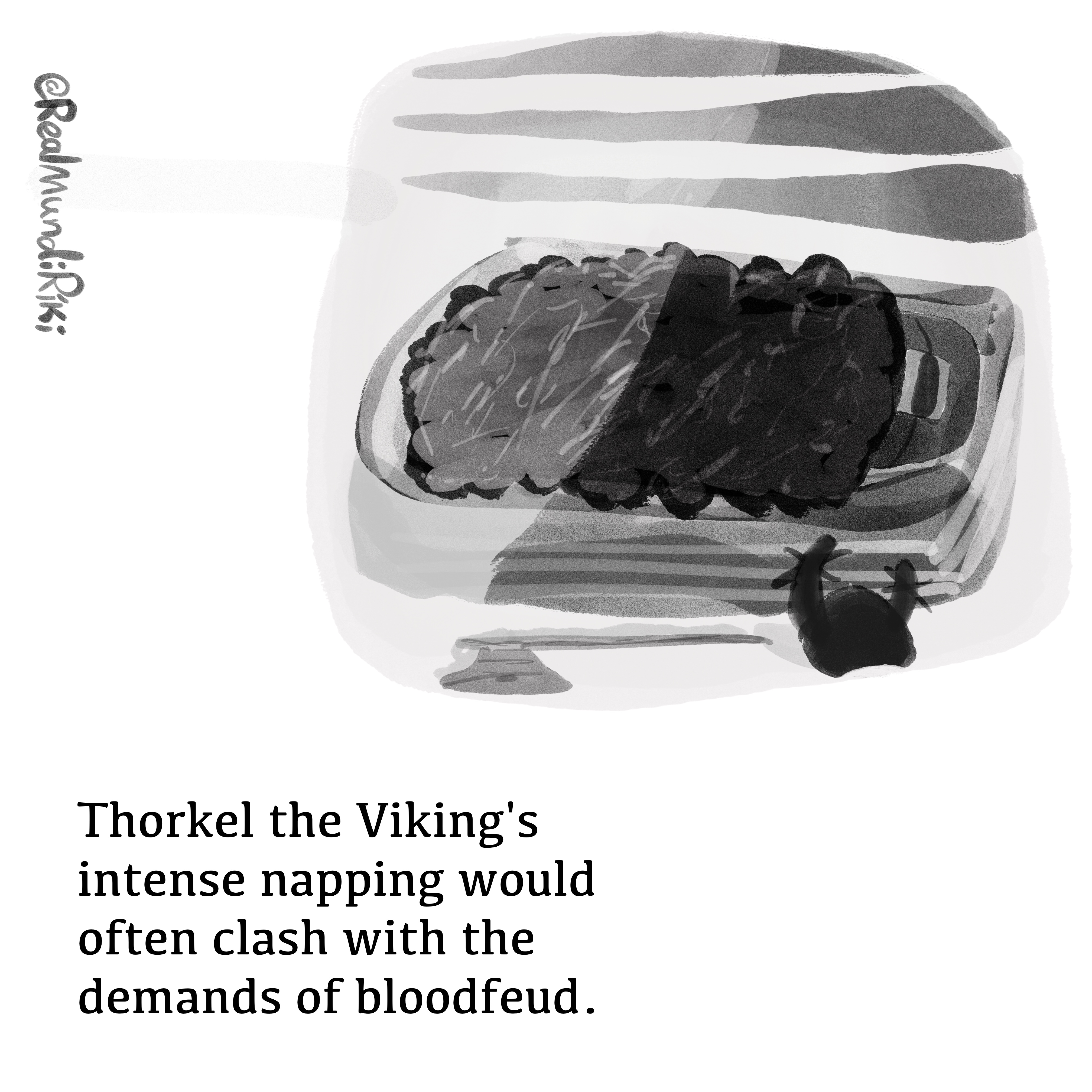 Figure 2 Thorkel the Viking - Yoav Tirosh @RealMundiRiki.
The series of episodes where Þorvarðr ensures the well-being of the district
is interrupted by two tales of Þorkell’s attempts at Bjarni’s life that are
frustrated by the would-be avenger’s health issues. In the first incident, Bjarni
travels over a certain heath in the district, when Þorkell and a force of men
suddenly appear before him and close in on him. Bjarni, as befitting a son of
Brodd-Helgi, quickly thinks of a clever ruse. He has a chopping block set up and
dressed to look like him, fitted on a horse, and while his two companions ride
with it as if it were Bjarni, he runs away into the woods to hide.
The success of
this plan lies in Þorkell’s ocular abilities; during this episode the narrator
informs us that “Þorkell var maðr eigi skyggn” [Þorkell was not a far-sighted
man] (ÍF 11, 56; my translation). Þorkell, who suspects that it is not really Bjarni
riding with the fellows, relies on the reports of his men, who confidently
ablesplain him that it is, in fact, his enemy. By the time the ploy is revealed,
Bjarni had escaped to safety.
In another instance, Þorkell invites his kinsmen
the Droplaugarsynir to his farm, and tells them that he intends to attack Bjarni
in Hof and burn his farm if necessary. His invitation of the Droplaugarsynir
shows that he means business; these are two of the most formidable warriors of
Northeast Iceland, who managed to kill—at the eventual cost of both their own
lives—a local goði in the eponymous Droplaugarsona saga.
They agree to attack
on the morrow, and retire to their beds. We are then told that “Þorkell var lítt
heill jafnan ok tók opt bráða sótt” [Þorkell was always of frail health and would
often become suddenly sick] (ÍF 11, 57; my translation). Indeed, at that very
night, such a health challenge occurs, and Þorkell must announce to the
Droplaugarsynir that he cannot fulfil his promise to attack and dissuades them
from attacking without him. They declare him a coward and leave his farm.
For the present context, the importance of these scenes is twofold. First, they
tie the saga thematically to the overall theme of health and control of violence,
which is present in its first part but made even more apparent in the saga’s
second part. The other function is that they set the stage for Þorkell’s recurring
battles with health; this foreshadows the issues he will later have recovering
from the battle wounds he receives in his final showdown with Bjarni. The
delayed vengeance through illness could be read into the religious model of
disability, tying health with the operations of God and the Church. But this
overlooks the thematic importance of Þorvarðr læknir and his facilitation of
peace.
While I cannot argue against there being Christian undertones to
Þorkell’s bouts with health, this is not the only story being told.
After much manoeuvring and narrative delays, Þorkell Geitisson and Bjarni
Brodd-Helgason eventually meet to do battle, outside the farm Eyvindarstaðir.
In a few of the post-medieval manuscripts, Þorvarðr is curiously mentioned
among the list of fighting men. In other manuscripts, the character that appears
in the battle is named Þórarinn or Þórðr (see ÍF 11, 61). Considering Þorvarðr’s
efforts to maintain peace in the district, his appearance at the battle seems
counter-intuitive. While it is unclear whether or not this character is indeed
meant to be Þorvarðr—considering the inconsistent manuscript evidence—his
presence in the battle is not necessarily in conflict with his portrayal in the saga
as otherwise conflict averse; this character’s reaction to the battle is to hide
behind a turf wall at the edge of the field, thus avoiding it.
Were the physician
Þorvarðr to find himself among the fighting parties, this seems like a likely
reaction.
The outcome of the battle is that some of the men are killed, and
some, including Bjarni and Þorkell, are wounded. Two of the fallen men are
called, in the Íslenzk fornrit edition of the saga, “Synir Glíru-Halla,” the sons of
Squinting-Halli, as Jón Jóhannesson interprets the name (ÍF 11, 62, footnote 3).
In the extant post-medieval manuscript, Halli is given various other by-names,
some of uncertain origin. This interpretation adds a supposed sensory disability
where it was possibly not present in the medieval version of the saga.
The fact
that later on Bjarni Brodd-Helgason invites Halli to move to Hof to where he will
be provided with fatherly care implies a degree of dependence that might or
might not be connected with sensory disability (or other difference associated
with his older age).
Another noteworthy battle casualty is Eilífr, who “fell ok
fyrir Hallbirni, ok lifði hann þá at kalla” (ÍF 11, 62). This could be translated as
“fell by the hands of Hallbjörn, and continued to live, so to speak.” While it is
reported later that Eilífr’s wounds are tended to, this sentence reveals that this
near-fatal wound hurt the man in a manner that presumably made him a
dependent for the rest of his life.
The wounded are brought back to their
respective farms, where Þorvarðr læknir treats Bjarni and his men. When it
becomes clear that Bjarni is on the mend, he hears that Þorkell’s health is not
faring so well. He therefore sends Þorvarðr from Hof to Krossavík to treat his
rival and kinsman. Þorvarðr receives a cold welcome, but is allowed to stay and
give care to Þorkell, who treats the healer with friendship and respect
afterwards. Sending Þorvarðr to heal Þorkell and the peace that results from it
between the Krossavík chieftain and the healer are the first step in the peace
that will occur between Þorkell and Bjarni. As Rolf Heller summarizes about this
saga: “Das Gute hat die Kraft, das Böse zu überwinden—gute Taten schaffen
Freunde” [Good has the power to overcome evil—good deeds create friendship]
(178; my questionable translation).
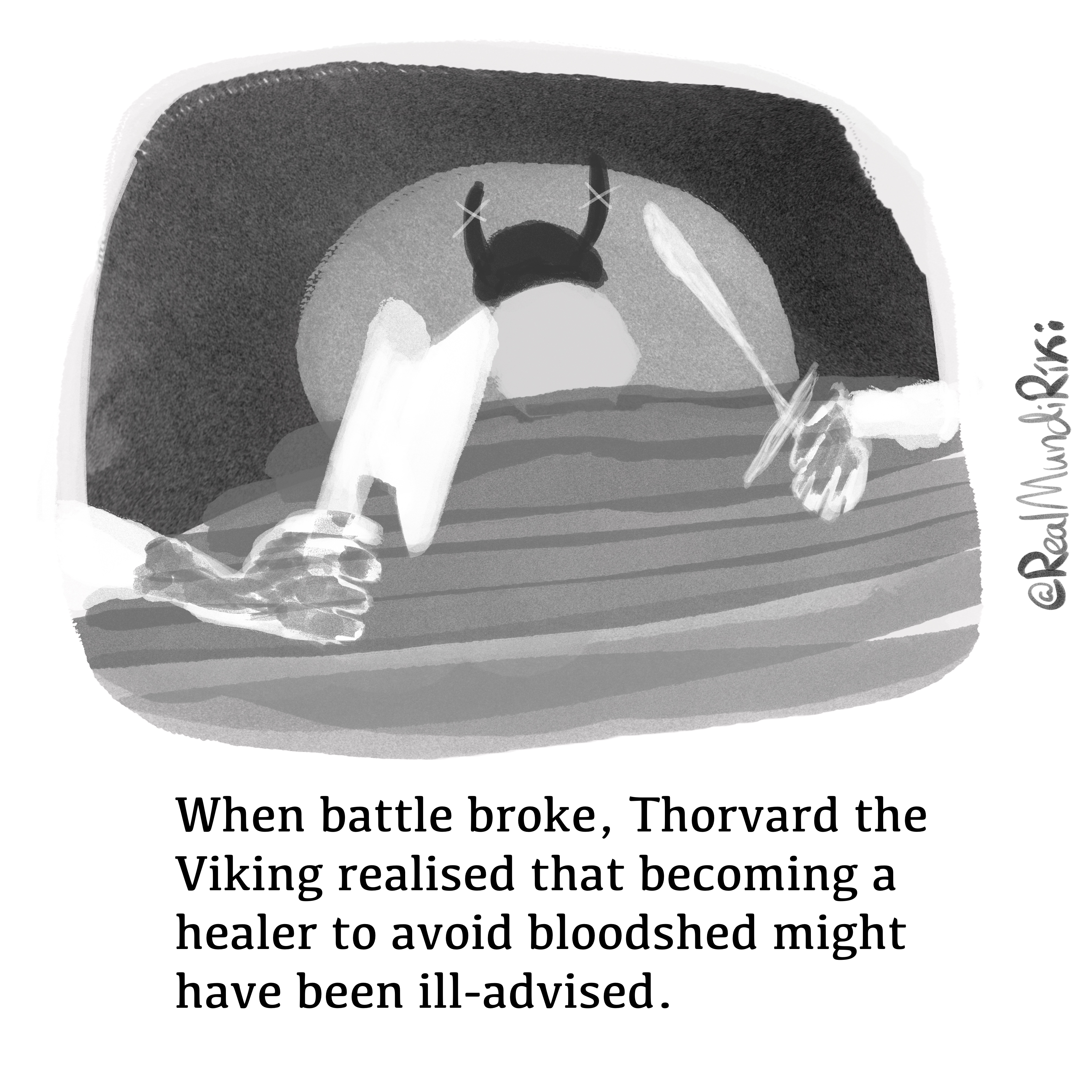 Figure 3 Thorvard the Viking - Yoav Tirosh @RealMundiRiki.
Vápnfirðinga saga’s second half, then, shows us—the eager yet unintended
audience—a clear path to peace that is facilitated through the body. The injuries
associated with a feuding society also offer an opportunity to heal and stop a
developing strife on its tracks. We cannot ignore the role of the physician here;
when, in the saga’s first half, the belligerent Brodd-Helgi played the role of an
ad hoc healer, the pus removal operation was a success, but the patient Halla
died. The importance of Þorvarðr’s arrival at the scene, both as an agent of
peace and as an agent of health, cannot be stressed enough. His knowledge and
ethics come together, and he offers a kind of medieval holistic view of the body’s
wellbeing as intrinsically tied to society’s wellbeing.
Conclusion
A look at Vápnfirðinga saga by focusing on embodied difference gives a
better appreciation of the narrative as a whole. It is embodied difference and
the way that different characters interact with it that shapes the saga’s conflicts
and their result. If Brodd-Helgi rejects his wife using her chronic illness as an
excuse, it is through disease that the surviving family members recreate their
ties. The role of the physician here is crucial, since he is at once a political player
whose main motive seems to be a selfless bargain for regional peace, while also
being used by Bjarni Brodd-Helgason as a bargaining tool. Is Vápnfirðinga saga
particularly interested in embodied difference, or is this body-focused
interpretation possible for any of the Íslendingasögur if we squint at them using
this particular prism? The amount of knowledge that has been produced in the
decades since disability studies have been introduced to Old Norse studies hints
to the potentiality of a disability-focused look at every member of the
Íslendingasögur corpus, and beyond.
NOTES
- Besides the Vápnfirðinga saga scholarship cited throughout this article, see also Jesse Byock’s work on this saga, which focuses on his feud analysis and its connection to traditional storytelling structures (Byock 1982; 1994).
- The so-called Þorsteins þáttr stangarhöggs could read as both an episode that is external to Vápnfirðinga saga or, as the present author is inclined to believe, as a part of it (see also Baldursdóttir 76). Of less relevance to the present debate is the issue of immanent sagas, stories that existed as separate units within Icelandic tradition, discussed at length in the context of the Eastfjords by Gísli Sigurðsson (2004).
- Sigríður Baldursdóttir (62, 66) rightly points out that analyses of this saga tend to focus on its first part concerning Brodd-Helgi and Geitir Lýtingsson and often gloss over their sons Bjarni and Þorkell’s feud.
- The concept of authorship has been seen as ever so problematic in recent decades. When an author is mentioned in this article, it is referring to “distributed authorship” of the kind established by Slavica Ranković and more recently expanded by Stefanie Gropper. See also Slavica Ranković and Miloš Ranković.
- Cleasby and Vigfússon (345) suggest “I know how to do a thing, I can” and, like Zoëga (244), call this a defective verb.
- The Íslenzk fornrit editor Jón Jóhannesson preferred the reading of the nickname “stikublígr,” which is also consistent with a few of the manuscript readings as well as scribal emendations, e.g., JS 434 4to 90v where another scribe noted “stikublígr” as a variant reading. The nickname stikublígr is of uncertain meaning; Vápnfirðinga saga translator John Tucker translates this quite literally as “Stick-Starer,” without explaining what this could possibly mean (Saga of the People of Vopnafjord 315). Jón Jóhannesson reads the stiku- component as a measuring stick, and glosses the nickname as “naumur maður,” a miserly fellow who frequently stares at a measuring stick (ÍF 11, 27, footnote 4). Finnur Jónsson (193 (353)) suggested that the nickname denoted a man whose stare is straight like a stick, while Paul Peterson (226) suggests treating the two components separately, with the stiku- part indicating a “lanky” fellow and blígr as a man who stares. Since most manuscript readings suggest “stikublindr,” I consider the stikublígr reading as a correction meant to settle Vápnfirðinga saga with the “historical” premise of Landnámabók, while at present we are more interested in the literary qualities of the text. In some manuscripts Þormóðr is called Þórólfr (e.g., AM 563 b 4to, 11v) upon introduction, putting to question whether or not the Þormóðr who fights with Þórðr over the woods is the same person.
- These puns are not unprecedented in saga literature, not even in the context of Icelandic woods. See Poilvez (112) on a similar joke made in Ölkofra saga on the expense of the burning of woods and the term for outlaw skógarmaðr (literally: woods’ man).
- Similarities are evident to Ragnars saga lóðbrókar.
- Despite this being a controversial translation of what is usually called The Saga of Njáll the Burnt, I opt for this equally grammatically correct reading in order to highlight what I understand as Njáll’s direct responsibility for the burning of his household and family. See also Tirosh 2014.
- Reading based on “Syv Sagablade” and AM 162 c fol. 4r.
- This dismissal of someone’s legitimate concern is reminiscent of how the medical model is used to control disabled people’s bodies. Sometimes a medical explanation is nothing more than a distraction.
- I would thank Christopher Crocker for pointing this out to me. On the religious model, see Wheatley. This understands disability in the Middle Age as a multifaceted experience tied with positive and negative interactions with the church, for example with healing, charity, accessibility limitations, and blame narratives.
- The choice of a chopping block is riddled with irony; its association with execution might not have been intuitive in those days (though in Icelandic folklore it does appear in the context of chopping off heads, see Íslenzkar þjóðsögur vol. 5, 76), but it is noteworthy that Bjarni is saved by the very thing that spells death for others. Also, the fact that he retreats to the woods when his father had disposed of an entire woods earlier as a feud’s escalation is also noteworthy; if his father had his way, perhaps the woods would no longer be there in which to hide. The only extant medieval (fragment) text witness of Vápnfirðinga saga is collated with Ljósvetninga saga, which also has a scene where a fleeing man evades a vengeance expedition by fleeing to the woods; this, following a clever ruse devised by a blind man (see Tirosh 2019, 144–146).
- See Crocker for the “Ocularcentrism” of the medieval order of senses.
- Which, incidentally, is also extant in AM 162 c fol.
- This is a classic case of they who smelt it dealt it, because in Droplaugarsona saga, Helgi Droplaugarson pulls the same move on Þorkell when the latter asks him to join him on a different violent venture. A fragment of Droplaugarsona saga also appears in AM 162 c fol., so the intertextuality here (whether it originated in the sagas’ oral origins, their original composition, or even their manuscript redactions) can hardly be a coincidence.
- See also Spray on the Hamlet-like narratives of saga literature.
- This is a good opportunity to thank Jósep Jósepsson of modern-day Vopnafjörður who took my wife and me to see the remnants of this very turf wall.
- “I don't recall ever fighting Godzilla, but that is so what I would've done” Futurama.
- Like with Þórmóðr stikublindr earlier in the saga whose name in the edition was changed due to having a different nickname in Landnámabók.
- Bjarni Brodd-Helgason seems to be on the prowl for a father-figure; later in Þorsteins þáttr stangarhöggs he also offers the aged viking Þórarinn to be a replacement son. This act recreates the accepted proposition of Þorsteinn fagri to Þorsteinn hvíti, Bjarni Brodd-Helgason’s great-grandfather, to be a replacement son due to his brothers’ killing of the older man’s son Þorgils (See also Crocker).
- On the concept of dependence in the case of Icelandic clergy, see Patzuk-Russell and Tirosh.
- Todd Michelson-Ambelang’s doctoral thesis is an example of the wide extent of disability descriptions in the Icelandic sagas. See also Christopher Crocker’s online Bibliography of disability and the medieval Icelandic sagas https://cwecrocker.com/bibliography-of-disability-studies-and-the-medieval-icelandic-sagas/
REFERENCES
- Baldursdóttir, Sigríður. 2002. “Hugmyndaheimur Vopnfirðinga sögu.” Gripla 13: 61–105.
- Bourns, Timothy. 2023. “Trees in the Dreamscape” In Ecocriticism and Old Norse Studies. Edited by Reinhard Hennig, Emily Lethbridge, and Michael Schulte. Turnhout: Brepols.
- Bragason, Úlfar. 1988. “The Structure and Meaning of Hrafns saga Sveinbjarnarsonar.” Scandinavian Studies 60: 267–92.
- Butler, Judith. 1993. Bodies That Matter: On the Discursive Limits of “Sex.” Abingdon-on-Thames: Routledge. https://doi.org/10.4324/9780203828274.
- Byock, Jesse L. 1982. Feud in the Icelandic Saga. Los Angeles: University of California Press. https://doi.org/10.2307/jj.2354078.
- ⸻. 1994. “Narrating Saga Feud: Deconstructing the Fundamental Oral Progression.” In Sagnaþing: Helgað Jónasi Kristjánssýni sjötugum 10. Apríl 1994. Edited by Gísli Sigurðsson, Guðrún Kvaran, and Sigurgeir Steingrímsson, 97–106. Reykjavík: Hið íslenska bókmenntafélag.
- Cleasby, Richard, and Guðbrandur Vigfússon. 1874. An Icelandic-English Dictionary. Oxford: Clarendon Press.
- Crocker, Christopher. 2020. “Narrating Blindness and Seeing Ocularcentrism in Þorsteins saga hvíta.” Gripla 31: 267–92. https://doi.org/10.33112/gripla.31.9.
- Crocker, Christopher and Yoav Tirosh. 2021. “Health, Healing, and the Social Body in Medieval Iceland.” In Understanding Disability Throughout History: Interdisciplinary Perspectives in Iceland from Settlement to 1936. Edited by Hanna Björg Sigurjónsdóttir and James G. Rice, 113–27. New York: Routledge. https://doi.org/10.4324/9781003180180-8.
- Einarsson, Bjarni. 1993. “Íslendingadrápa.” In Medieval Scandinavia, an Encyclopedia. Edited by Phillip Pulsiano and Kirsten Wolf, 52–53. Garland Encyclopedias of the Middle Ages 1. New York: Garland Publishing.
- Gropper, Stefanie. 2023. “Authorship and auctoritas in Sagas of Early Icelanders: The Example of Reykdœla saga.” In Germanisches Altertum und Europäisches Mittelalter: Gedenkband für Heinrich Beck. Edited by Wilhelm Heizmann and Jan Alexander van Nahl, 139–56. Berlin: De Gruyter.
- Heiniger, Anna Katharina. 2020. “The Silenced Trauma in the Íslendingasögur.” Gripla 31: 233–65. https://doi.org/10.33112/gripla.31.8.
- Heller, Rolf. 1963. “Studien zu Aufbau und Stil der Vápnfirðinga saga.” Arkiv för nordisk filologi 78: 170–89.
- Hollander, Lee M. 1961. Review of Saga. Untersuchungen zur nordischen Literatur- und Sprachgeschichte, hrsg. Walther Baetke. Heft I: Ernst Walter, Studien zur Vápnfirðinga Saga. Halle, 1956. Heft II: Rolf Heller, Die literarische Darstellung der Frau in den Isländersagas. Halle, 1958. Heft III: Rolf Heller, Literarisches Schaffen in der Laxdœla Saga. Halle, 1960. The Germanic Review: Literature, Culture, Theory 36.2: 154–57.
- ÍF 11 = Austfirðinga sögur. Edited by Jón Jóhannesson. Íslenzk fornrit 11. Reykjavík: Hið íslenzka Fornritafélag, 1950.
- Íslenzkar þjóðsögur og ævintýri. Vol. 5. Edited by Jón Árnason, with Árni Böðvarsson and Bjarni Vilhjálmsson. 2nd ed. Reykjavík: Þjóðsaga, 1958.
- Jónsson, Finnur. 1907 (1908). Tilnavne i den islandske oldlitteratur. Copenhagen: H.H. Thiele.
- Kristjánsson, Jónas. 1975. “Íslendingadrápa and Oral Tradition.” Gripla 1: 76–91.
- Künzler, Sarah. 2016. Flesh and Word: Reading Bodies in Old Norse-Icelandic and Early Irish Literature. Berlin: De Gruyter. https://doi.org/10.1515/9783110455878.
- Michelson-Ambelang, Todd. 2015. “Outsiders on the Inside: Conception of Disability in Medieval Western Scandinavia.” Doctoral thesis, University of Wisconsin-Madison. https://asset.library.wisc.edu/1711.dl/UB4LRRNUOPOFA8F/R/file-3a222.pdf.
- Orel, Vladimir E. 2003. A Handbook of Germanic Etymology. Leiden: Brill.
- Patzuk-Russell, Ryder C., and Yoav Tirosh. 2024. “Icelandic Hospitals, Disabled Clergy, and the Saga of Bishop Lárentíus.” Mirator 24.1: 1–17. https://doi.org/10.54334/mirator.v24i1.141618.
- Peterson, Paul. 2015. “Old Norse Nicknames.” Doctoral thesis, University of Minnesota, Twin Cities. https://hdl.handle.net/11299/172669.
- Poilvez, Marion. 2022. “Food and Exclusion: Beer, Chicken and Social Mobility in the Saga World.” In Food Culture in Medieval Scandinavia. Edited by Viktoria Gyonki and Andrea Maraschi, 99–116. Amsterdam: Amsterdam University Press. https://doi.org/10.1017/9789048540235.005.
- Ranković, Slavica. 2007. “Who is Speaking in Traditional Texts? On the Distributed Author of the Sagas of Icelanders and Serbian Epic Poetry.” New Literary History 38.2: 239–307. https://www.jstor.org/stable/20058004.
- Ranković, Slavica, and Miloš Ranković. 2012. “The Talent of the Distributed Author” in Modes of Authorship in the Middle Ages. Edited by Slavica Ranković et al., 52–75. Toronto: The Pontifical Institute of Mediaeval Studies Press, 2012.
- “The Saga of the People of Vopnafjord.” Translated by John Tucker. In The Complete Sagas of Icelanders, Including 49 Tales. Vol. 4. Edited by Viðar Hreinsson, Robert Cook, Terry Gunnell, Keneva Kunz, and Bernard Scudder, 313–34. Reykjavík: Leifur Eiríksson, 1997.
- Sayers, Edna Edith [published as Bragg, Lois]. 1997. “From the Mute God to the Lesser God: Disability in Medieval Celtic and Old Norse Literature” Disability & Society 12.2: 165-78. https://doi.org/10.1080/09687599727317.
- Sexton, John. 2010. “Difference and Disability: On the Logic of Naming in the Icelandic Sagas.” In Disability in the Middle Ages: Reconsiderations and Reverberations. Edited by Joshua R. Eyler, 149–63. London and Burlington, VT: Ashgate. https://doi.org/10.4324/9781315577388.
- Sigurðsson, Gísli. 2004. The Medieval Icelandic Saga and Oral Tradition, a Discourse on Method. Translated by Nicholas Jones. Publications of the Milman Parry Collection of Oral Literature 2. Cambridge, MA: Milman Parry Collection. https://chs.harvard.edu/book/sigurdsson-gisli-the-medieval-icelandic-saga-and-oral-tradition-a-discourse-on-method/.
- Spray, Thomas. 2022. “‘Grei þetta er fullt flaerdar og falskleita’: The Many Ghosts of Hamlet in Sagas and Folklore.” In Pre-Print Papers of the 18th International Saga Conference: Sagas and the Circum-Baltic Arena: Helsinki and Tallinn, 7th–14th August 2022. Edited by Frog, Joonas Ahola, Jesse Barber, and Karoliina Kouvola, 311–318. Helsinki: Folklore Studies, Department of Cultures, University of Helsinki.
- “Syv Sagablade (AM 162 C fol, bl. 1–7).” 1975. Edited by Jón Helgason. Opuscula 5: 1–97.
- Tirosh, Yoav. 2014. “Víga-Njáll: A New Approach Toward Njáls saga.” Scandinavian Studies 86.2: 208–26. https://muse.jhu.edu/pub/144/article/553841.
- ⸻. 2019. “On the Receiving End: The Role of Scholarship, Memory, and Genre in Constructing Ljósvetninga saga.” Doctoral thesis, University of Iceland. https://hdl.handle.net/20.500.11815/1305.
- ⸻. 2025. “The Storyworld/s of AM 162 c fol.: How Manuscripts Govern Icelandic Saga Worldbuilding.” In Storyworlds and Worldbuilding in Old Norse‑Icelandic Literature. Edited by Rebecca Merkelbach, 221–24, Turnhout: Brepols. https://doi.org/10.1484/M.TCNE-EB.5.143717.
- Wheatley, Edward. 2010. Stumbling Blocks Before the Blind: Medieval Constructions of a Disability. Ann Arbor: University of Michigan Press. https://doi.org/10.3998/mpub.915892.
- Zoëga, Geir T. 1961 [1910]. A Concise Dictionary of Icelandic. Oxford: The Clarendon Press.